
I wish to greet every guest to this page with the knowledge that taking a moment to understand responsible gambling is a mark of resilience, not weakness. At LuckyHills Casino, I view my position as more than just providing entertainment. I think that every player merits a transparent, truthful set of resources to safeguard their hours, finances, and well-being. This material is here because gambling should always stay a enjoyable leisure pastime, and I would not want it to become a origin of anxiety or damage. I have organized the information here so that any player, whether a newcomer to online casinos or a established member of our community, can rapidly find practical recommendations on establishing boundaries, identifying early red flags, and obtaining professional help. My dedication to you begins right here, with transparency and genuine regard at the heart of everything I share.
Recognizing Problem Gambling and Its Effects
I define problem gambling as any pattern of play that starts affecting your personal life, relationships, or finances. The shift from controlled entertainment to harmful behaviour is often gradual, and I recognize it can affect anyone regardless of background or experience. What makes this disorder particularly challenging is its invisibility; there are no physical signs, and the shame that accompanies financial loss makes it difficult to address openly. I want you to understand that problem gambling is a recognized mental health disorder, not a moral failing. The consequences can affect work performance, sleep quality, and emotional stability, yet early intervention regularly leads to better outcomes. By comprehending how dopamine responses and near‑misses influence decision‑making, I can help you grasp why stopping feels so hard, and why professional support is not something to fear.
I also need to stress that problem gambling does not only impact the individual. Family members often carry silent burdens, and trust within a household can erode long before anyone asks for help. At LuckyHills Casino, I receive messages from concerned partners and relatives, and I always urge them to seek guidance just as earnestly as I would the player. The isolation that accompanies compulsive play is something I take very sincerely. That is why I have built this page to help both the player who is questioning their habits and the loved one who is searching for clarity. No two stories are alike, but the path to recovery frequently begins with the same step: acknowledging that the current relationship with gambling is no longer healthy and that a support network is available to make change possible.
Time‑Out Intervals for Short‑Term Breaks
I understand that not every concern requires a six‑month exclusion. Sometimes you simply want a week or a month to clear your mind. That is precisely why I introduced cooling‑off periods as a adaptable middle ground. A cooling‑off period momentarily freezes your profile for a length you define, typically between one day and six weeks. During this time, you cannot log in, deposit, or play, but your account remains intact and will restore itself once the selected period concludes. I recognize that life is full of trying moments, and a short, deliberate pause can stop a difficult day from transforming into unfortunate gambling decisions. It is a approach I use in my own life in other contexts, backing off from anything that threatens an emotional crutch.
To configure a cooling‑off period, you simply head to the gambling responsibly section of your profile and select the time‑out period. There is no waiting period for a cooling‑off request to take effect; it is instant. I made that choice because hesitation should never interfere with you and a safer headspace. When the cooling‑off expires, I send a single message, but I do not flood you with deals or enticements to return. The choice to play again is completely your call. I often recommend a cooling‑off period to players who mention sensing a bit too connected to their losses or who notice that gambling has crept into work hours. It is a understated but effective reset that costs nothing.
Recognizing the Early Warning Signs
I would like to describe the signs that I have learned to look for, luckyhillscasino veilig gokken, both from professional training as from discussions with players who later wished they had noticed sooner. One of the first indicators is a difference in language: when a player describes a loss as a “near win” or mentions being “due” for a big payout, I know the mind is starting to distort probability. Other practical alarms include being dishonest to family members about the amount of time or money spent, borrowing funds to gamble, or skipping social commitments. Sleep disturbances and irritability when unable to play are also signs that I encourage you not to pure.uva.nl ignore. None of these alone indicates a disorder, but when several appear together, it is time to seek an honest conversation with yourself or a trusted person.
I also closely monitor emotional cycles. Chasing losses, the frantic attempt to win back what has been lost, is perhaps the most dangerous habit I see. It transforms gambling from a leisurely activity into a stressful race against a mathematical reality that cannot be defeated. If you find yourself depositing immediately after a loss or experiencing anxious until your next deposit clears, I urge you to pause and review this page. Financial secrecy is another important marker; hiding bank statements or creating separate accounts is a behaviour I witness too often. I pledge that reaching out to a support service is infinitely less painful than the trajectory these signs suggest. Acknowledging a warning sign is an act of self‑respect, not shame.
Self‑Exclusion Tools and How They Operate
There are occasions when the most effective limits are not sufficient, and a total pause from gambling becomes the safest decision. I provide a self‑ban tool that allows you to close your LuckyHills Casino account for a timeframe you select, ranging from six months to five years, or even permanently. I want you to understand precisely what occurs when you activate this tool. Once approved, your account is instantly frozen, no funding or gameplay are allowed, and our promotional emails stop entirely. During the exclusion phase, I am not able to and shall not reopen the account, regardless of any request you make. This irreversible character might appear daunting, but I think it is precisely this firmness that provides self‑exclusion its power.
The process of activating self‑exclusion is simple and dealt with with total privacy. You can initiate it directly from your account preferences or by reaching my assistance team, who will lead you through a short confirmation step. I never ask for lengthy justifications or proof; a simple request is sufficient. I also want you to know that self‑exclusion at LuckyHills Casino is part of a wider pledge. I actively share exclusion data with other regulated providers in the Netherlands where legally permissible, so that your break is respected across several websites. If you are considering self‑exclusion, I encourage you to look at it not as a defeat but as a brave restart. Many players go back after a lengthy break with a fully refreshed, balanced perspective, and I will embrace that arrival with the same care I give at this moment.
Obtaining Professional Support in the Netherlands
I am dedicated to connecting you with expert, unbiased help that extends far beyond what any casino can offer. In the Netherlands, several highly regarded organizations provide free, private assistance for anyone impacted by problem gambling. I frequently refer players to Loket Kansspel, which serves as the central information and registration point, and to AGOG, an association of addiction counselors who focus on gambling disorders. These professionals understand the Dutch cultural context and provide services in your native language, which I believe makes a significant difference in feeling truly heard. They provide individual therapy, group sessions, and even financial counseling to help you rebuild stability.
I also want to highlight the national self‑exclusion register, Cruks, which means Centraal Register Uitsluiting Kansspelen. Registering with Cruks excludes you from all land‑based and online gambling venues that possess a Dutch license. I strongly recommend this step for anyone who feels that self‑exclusion at a single casino is insufficient. The registration process is overseen by the Kansspelautoriteit, and I can help you with how to apply, though the final registration must be completed through their official channel. Additionally, organizations like Jellinek and Hervia offer evidence‑based treatment programs. I have spoken with representatives from these groups, and their no‑judgment approach always puts people at ease. You are not alone in handling this, and professional support is present right now.
Establishing Personalized Deposit Limits
I have always thought that the single most powerful instrument you can employ before you play is a deposit limit. Within your LuckyHills Casino account, I give you the ability to set daily, weekly, or monthly caps on how much money is deposited. I developed this feature so that the limit is forward‑looking and proactive; it forces a pause before any impulsive decision can lead to chasing losses. When you hit a deposit cap, the system simply rejects further transactions, and I find this mechanical boundary remarkably effective. It removes self‑control from the equation at the moment when emotions might be running high. I suggest that every player, regardless of bankroll size, establishes a deposit limit that reflects truly disposable income, money you would comfortably spend on an evening out without regretting it the next morning.
I want to explain how these limits work technically because I know confusion can discourage someone from using them. Once you configure a deposit limit, any request to increase that amount triggers a cooling‑off period, which I implement to prevent heat‑of‑the‑moment decisions. Decreasing your limit, however, takes effect immediately. That asymmetry is deliberate; I want it to be easy to tighten your boundaries and deliberately slow to loosen them. This design follows the behavioural science principle of commitment devices. If you ever feel that even the cooling‑off buffer is not enough, my support team can implement a further manual freeze upon request. I genuinely motivate you to view deposit limits not as a restriction but as a structure that protects the enjoyment you originally came here to experience.
Our Continuing Pledge for a Safer Gaming Space
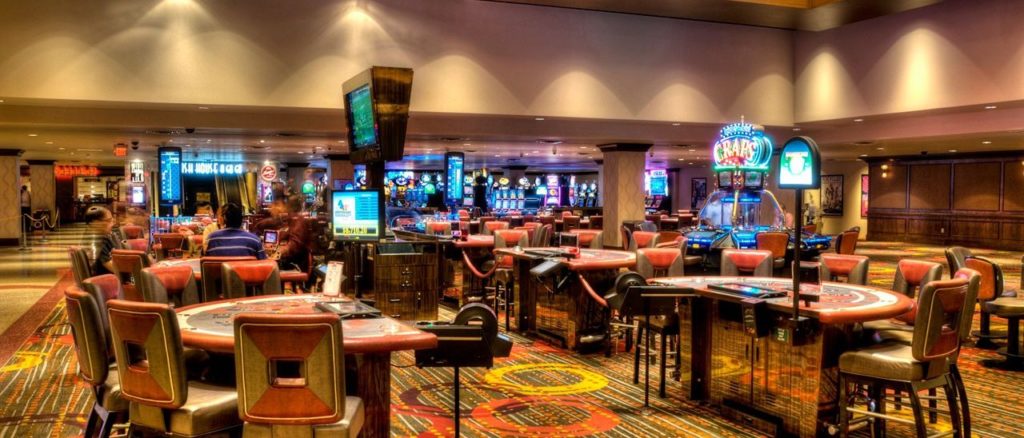
I refuse to treat responsible gambling as a fixed rule hidden in a footer link. My commitment develops, and I continuously test new safety features, take into account player feedback, and modify the platform to offer stronger safeguards. Over the past year alone, I have improved the forced break mechanism that activates after long sessions and implemented clearer labelling for high‑volatility games so that you can choose more wisely. I am also creating a personalized dashboard that gives you a single view of all your limits, recent spend, and self‑assessment scores. I want you to feel that the tools designed to protect you are just as modern and user‑friendly as the games themselves.
I promise to stay transparent about my approach. If a new regulation is implemented by the Kansspelautoriteit, I will put it into full effect and describe the update in simple terms. I do not consider compliance as a box to check; I see it as the bare minimum foundation upon which real trust is built. My ultimate responsibility is not to shareholders but to the individuals who select LuckyHills Casino for their entertainment. I encourage you to bookmark this page and return whenever you require an update of the options available. Protecting your well‑being is not a one‑time conversation; it is a continuous dialogue, and I am here to preserve it open, honest, and free from stigma.
Setting Session Time Limits and Reality Checks
Time can slip away incredibly fast when you are engrossed in an captivating game, and I understand that losing track of hours often leads to fatigue‑based mistakes. That is why I incorporated session time limits straight into the LuckyHills platform. You can select a maximum duration for a individual playing session, and once that period expires, you will be softly logged out. I created this feature with a friendly, non‑judgmental notification style because the goal is never to punish you but to alert you that the world outside the screen merits attention too. In my view, players who set a 90‑minute session window and actually take a break report significantly greater enjoyment with their overall gaming experience. The break renews perspective and keeps the entertainment feeling fresh rather than compulsive.
I also urge you to activate reality checks, which are pop‑up reminders that emerge during play at intervals you pick. Unlike the hard stop of a session limit, a reality check simply invites you to note how long you have been playing and to check your wins and losses so far. I have observed this moment of conscious reflection shift the flow of an entire evening. When you view the numbers in black and white, it is much simpler to determine whether to continue or to walk away with your balance intact. At LuckyHills Casino, you can configure reality check intervals as brief as thirty minutes, and I strongly recommend starting there. The mix of time‑based tools and financial limits creates a safety net that I am proud to present as standard.
The methods by which LuckyHills Cooperates with Responsible Gaming Bodies
I take a hands-on role in the wider responsible gambling ecosystem because I understand that separate efforts are not enough. LuckyHills Casino maintains ongoing communication with Dutch addiction prevention services to ensure that our internal protocols remain in line with the latest clinical advice. I consistently review training materials for my customer support team so that they can identify at‑risk behaviour without being intrusive. When a player gets in touch with a concern, our staff is trained to respond with empathy, factual information about limits and self‑exclusion, and direct referrals to independent help. I do not view these conversations as a burden; they are some of the most significant interactions we have.
Beyond immediate player contact, I engage in research collaborations and data‑sharing initiatives that help pinpoint harmful play patterns before they escalate. For instance, I analyse playing behaviour where spending sharply increases after a loss, and I may proactively present a reality check or a message about deposit limits. This is done algorithmically but with a human‑first touch, every automated message is reviewed for tone to ensure it supports rather than worries. I also engage with organisations that promote youth gambling prevention, because I believe that education must start long before someone turns eighteen. My partnership with these groups underlines a value I hold dearly: a sustainable gaming industry is one that actively prevents harm rather than merely managing its aftermath.